UX audit · Information architecture · Case study
GMR Airports
Turning evidence from an airport UX audit into a ranked plan for improvement.
- My role
- UX audit and information architecture.
- Project scope
- Navigation and service discovery across a network of twelve airports.
- Delivery
- Eight review lenses and a prioritised now, next and later agenda.
APPROACH / UX audit · Information architecture
My design process
How I approached the work, from the first question to a concrete design decision.
Frame the traveller task
Define the airport context, journey, ownership and success criteria.
OUTPUTAudit scopeGather the evidence
Walk through the interface and capture uncertainty and friction.
OUTPUTAnnotated walkthroughsPrioritise the findings
Assess issues through eight review lenses and organise action into now, next and later.
OUTPUTPrioritised roadmapPlan repeatable evaluation
Set a baseline for a later team to repeat the same traveller task after changes.
OUTPUTRe-audit plan
A traveller needs the right answer for the right airport
Information about an airport is useful only if a traveller can tell which location it applies to. A shared network structure can make services easier to recognise, but local information has to stay attached to its airport. That tension shaped my review of navigation and information hierarchy.
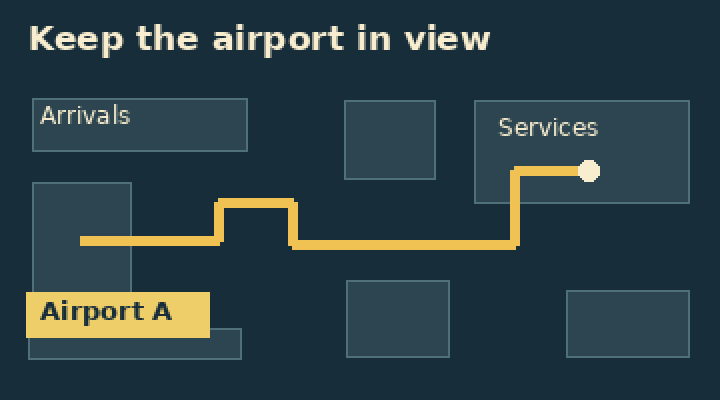
Establish the traveller’s location. Follow the passenger task. Keep the airport name visible.
Frame the task before rating the interface
The audit began by defining journeys, ownership and success. I used walkthroughs to capture the route a visitor would take, the decision each screen required and the point where the next step became uncertain. The evidence needed to be legible to the people funding and implementing a fix.
Grade findings through eight lenses
Findability and orientation cover reaching a service and knowing where you are. Comprehension and task flow cover language and sequence. Recovery, consistency, accessibility and trust signals cover what happens when the path is unfamiliar or something goes wrong. These lenses give a reviewer a more precise diagnosis than “navigation is confusing.”
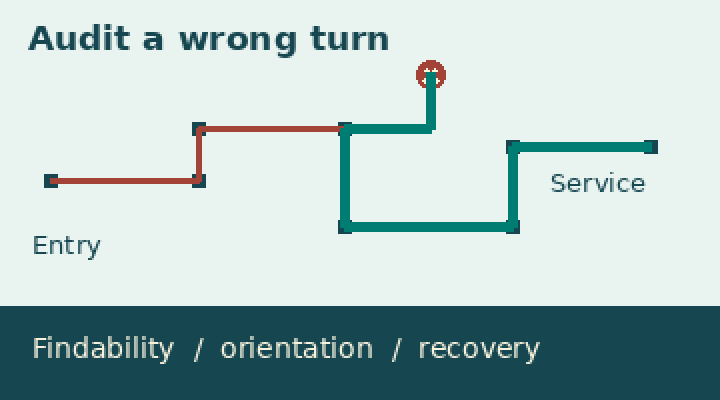
Can a traveller reach the service? Is the airport still clear? Can they retrace a wrong turn?
Turn the readout into a sequence of decisions
The deliverable brought annotated walkthroughs and graded findings into an executive summary. A now, next and later agenda connected severity to action. A re-audit plan specified a baseline so a later team could repeat the same task and compare the result.
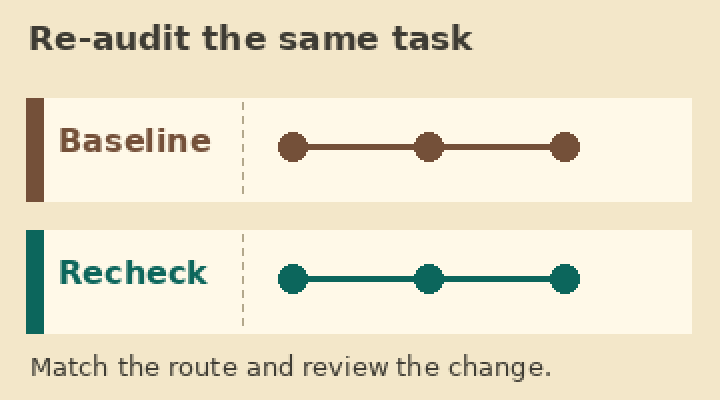
Walk the original task. Choose which finding to address. Repeat the same walkthrough.
Design decisions
- Across the network
- Check whether a common traveller question has a recognisable route.
- Within one airport
- Check whether the service information clearly belongs to that location.
- After a fix
- Repeat the walkthrough against the baseline.
Outcome
The audit produced an evidence-led roadmap, prioritised findings and a re-audit plan alongside the twelve-airport IA work. The roadmap describes decisions available to the team.
What I would measure next
Repeat one service-finding task across airports and record successful completion, wrong turns and recovery.