Industrial · Website UX · Case study
Lohia Corp
Helping an industrial buyer move from a production need to a machinery conversation.
- My role
- Website UX, UI and content design at Screenroot.
- Project scope
- Applications, machinery, Packtex, lifecycle service and careers.
- Delivery
- Buyer-facing architecture connecting applications with technical capability and service.
APPROACH / Industrial · Website UX
My design process
How I approached the work, from the first question to a concrete design decision.
Frame buyer intent
Account for buyers who know their application and those who already know a machine.
OUTPUTTwo entry routesBuild the architecture
Connect applications, machinery, Packtex, services and careers.
OUTPUTInformation architectureDevelop the page narrative
Move from relevance to technical detail and an informed enquiry.
OUTPUTContent & page hierarchyDefine the next check
Compare application-led discovery with named-machine lookup in a future navigation test.
OUTPUTProposed findability check
The buyer and the manufacturer start in different places
A buyer may know the material they need to produce before they know the name of a machine. A manufacturer has a precise vocabulary for its machinery. The website needed to connect those starting points while retaining technical depth for visitors who already know the range.
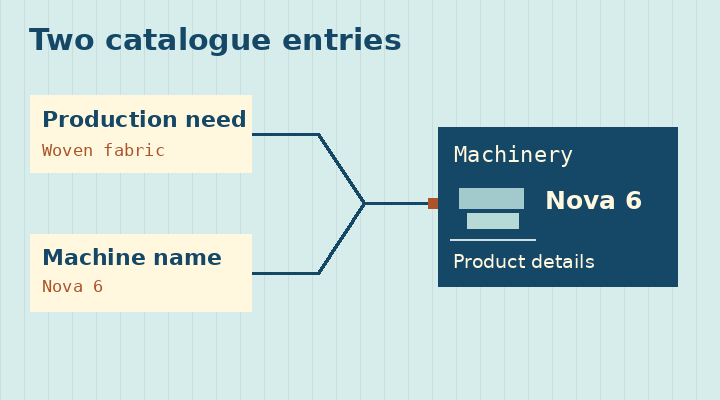
Start with the application. Search by product name. Inspect the relevant capability.
Build an entry route around the application
I worked on the structure and content for woven-fabric applications, tapes, monofilament and multifilament. Application-level explanations give a visitor a way to establish relevance. Machinery pages can then introduce a named product such as Nova 6 and explain its capabilities in context.
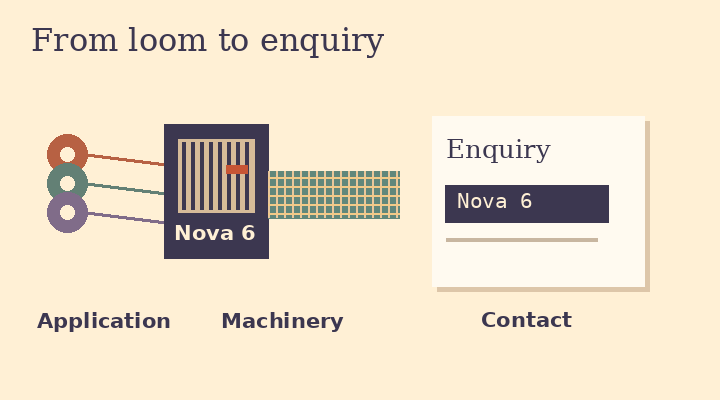
Choose the production need. Find a relevant machine. Carry the product into contact.
Give adjacent offers their own place
Packtex needed a clear account of its offer alongside the machinery story. Service needed to remain visible beyond initial purchase consideration. Careers answered a different audience altogether. Separating these routes protected the buyer’s path while giving other visitors a clear way in.
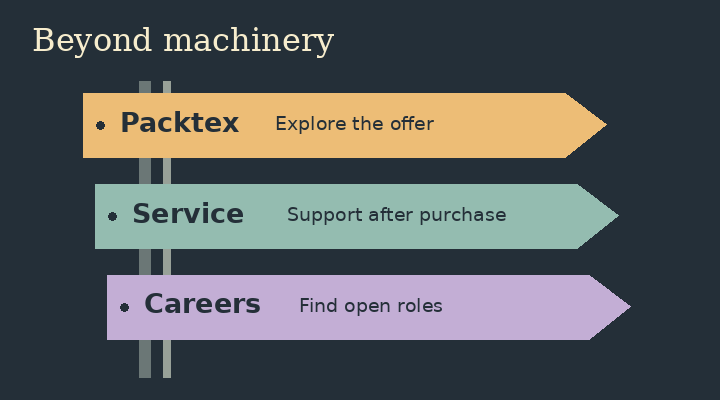
Explore its distinct offer. Find support after purchase. Follow a separate applicant route.
Support different depths of reading
The overview had to make sense to a newcomer. Product naming, technical information and service routes still needed to work for a returning specialist. I used page introductions and hierarchy to connect those levels so a reader could move from relevance to detail and then into a useful conversation.
Design decisions
- Application-led enquiry
- Start from the production need and identify relevant capability.
- Known machinery
- Retain product naming and technical detail for direct lookup.
- After purchase
- Keep service and contact routes within reach of the product story.
Outcome
The design contribution linked applications, machinery and ongoing service in a coherent B2B information architecture. It also gave Packtex and careers distinct routes.
What I would measure next
To assess findability, compare a first-time buyer finding a relevant application with a returning buyer looking for a named machine.